
If you are trying to figure out how to get out of a solar contract in Colorado, start with the complete transaction, not just the page with your signature.
Some Colorado homeowners still have a clear cancellation right. Others may have a possible path based on the way the agreement was sold, signed, financed, installed, transferred, or performed.
The strongest path may involve cancellation, release, settlement, payment correction, buyout, transfer, service enforcement, warranty assistance, or another contract-specific resolution.
The direct answer: There is no single method for getting out of every solar contract. Your options depend on the cancellation deadline, contract type, financing, sales process, project status, companies involved, evidence, and outcome you need.
Do not assume the solar company has the final word simply because it says the agreement is binding. At the same time, do not stop payments, remove equipment, or send a generic cancellation letter without understanding the consequences.
A responsible review begins with the documents and facts. The detailed Colorado Solar Contract Review allows you to submit the agreement, financing paperwork, proposal, bills, and communications connected to your situation.
Can You Get Out of a Solar Contract in Colorado?
Sometimes. The easiest situation is when a homeowner acts during an applicable cancellation period and follows the required notice instructions.
When that initial period has passed, the answer becomes more fact-specific. A complete review may examine:
- The date and location where the agreement was signed
- Whether the sale occurred at the homeowner’s residence
- The cancellation language in each agreement
- Whether required disclosures and cancellation forms were provided
- What the salesperson represented before the documents were signed
- Whether the financing matched the sales presentation
- Whether every required owner authorized the transaction
- Whether the project was permitted, installed, inspected, and activated
- Whether the system has performed as represented
- Whether the installer, lender, servicer, or system owner performed its obligations
- Whether the agreement contains a buyout, transfer, or early-termination procedure
- Whether a home sale, refinance, company closure, or payment problem changed the situation
Cancellation is not the only meaningful result. A homeowner may instead need a negotiated release, loan correction, lease buyout, PPA transfer, warranty response, system repair, payoff adjustment, UCC resolution, or another form of relief.
The Colorado solar exit options guide explains several potential resolutions in greater detail.
Start With the Cancellation Deadline
The first question is whether a cancellation period is still open. Do not rely solely on what a salesperson or customer-service representative tells you over the telephone.
Locate the written cancellation section and determine:
- When the cancellation period began
- How many business or calendar days it lasts
- Whether weekends or holidays are excluded
- Which company must receive the notice
- Which address, email, portal, or delivery method must be used
- Whether a specific cancellation form is required
- Whether the financing company must receive separate notice
- Whether a deposit is refundable
Colorado Agreements Entered Into on or After July 1, 2026
Colorado enacted new consumer-protection requirements for covered residential solar and battery agreements entered into on or after July 1, 2026.
For a covered sale of a residential solar electric system or battery system, the consumer receives at least three business days to cancel without a financial penalty other than a permitted nonrefundable deposit. The cancellation period does not begin until the solar sales company completes the required welcome call.
The law also establishes requirements involving consumer disclosures, agreement terms, financing documents, sales conduct, record retention, installation, and workmanship warranties.
The statute covers several types of residential energy agreements, but the automatic three-business-day cancellation provision is specifically described for a system sale. Do not assume that every lease or power purchase agreement receives the same statutory cancellation treatment without reviewing the contract and applicable requirements.
Read the official Colorado residential energy-system consumer-protection law and compare its provisions with the date and structure of your transaction.
An agreement signed before July 1, 2026 may be governed by different contract language and legal requirements. The new Colorado protections should not automatically be applied to an older transaction.
The Federal Cooling-Off Rule
The Federal Trade Commission’s Cooling-Off Rule may provide three business days to cancel certain sales valued at more than $25 that occur in a consumer’s home or at another qualifying temporary location.
The rule may apply even when the homeowner invited the salesperson into the home. It does not, however, cover every solar transaction. Transactions completed entirely online, by mail, or by telephone may fall outside the rule, and other conditions and exclusions can apply.
When the rule applies, the seller must provide required cancellation information, including a dated contract or receipt and cancellation forms.
Review the FTC Cooling-Off Rule guidance before assuming that your sale is or is not covered.
Your Contract May Give You Additional Rights
The agreement itself may provide rights beyond a statutory cancellation period. Look for language involving:
- Pre-installation termination
- Financing approval
- Site or roof suitability
- Utility or permitting approval
- Homeowner association approval
- Change orders or material system-design changes
- Installation deadlines
- Equipment availability
- Buyout or prepayment options
- Lease or PPA transfers
- Early-termination charges
- Production or workmanship guarantees
- Default and dispute procedures
What to Do When the Cancellation Period Is Still Open
When you believe a cancellation deadline remains open, act promptly and follow the written instructions exactly.
- Locate the cancellation provision and any separate cancellation form.
- Complete the notice clearly and identify the agreement, property, homeowner, and date.
- Send the notice through every delivery method required by the agreement.
- Keep screenshots, delivery confirmations, certified-mail receipts, email records, and copies of everything sent.
- Notify the financing company separately when the documents or circumstances require it.
- Request written confirmation that the sales, installation, and financing obligations have been cancelled.
- Continue monitoring accounts, permits, communications, and payment activity until cancellation is confirmed.
Cancelling a sales agreement does not necessarily cancel a separate loan, lease, or PPA automatically. Every connected agreement should be identified and addressed.
Identify Which Type of Solar Contract You Signed
Homeowners often refer to every document as “the solar contract,” but the financial and ownership structure can change the available options.
| Contract Type | Typical Structure | Issues to Review |
|---|---|---|
| Cash purchase | The homeowner buys the equipment directly, sometimes through multiple scheduled payments. | Cancellation deadline, deposit, installation status, permits, change orders, workmanship, warranties, and refund terms |
| Solar loan | The homeowner generally owns the system and repays a lender or finance company. | Loan principal, dealer fees, APR, re-amortization, tax assumptions, disbursement, payment status, and lender relationship |
| Solar lease | A third party generally owns the system and the homeowner pays a recurring lease payment. | Contract term, payment escalator, maintenance, buyout, transfer, early termination, removal, and home-sale requirements |
| Power purchase agreement | A third party generally owns the system and the homeowner pays for the electricity it produces. | Energy rate, annual escalation, minimum charges, production, buyout, transfer, system removal, and end-of-term options |
| Battery or combined agreement | A battery may be included in the solar agreement or governed by a separate purchase, lease, or financing document. | Separate ownership, warranties, installation scope, financing, utility programs, and cancellation terms |
Company-specific leases and power purchase agreements can contain their own buyout, transfer, prepayment, and early-termination rules. Homeowners dealing with one of the largest national providers should also review:
- How to Cancel a Sunrun Solar Lease in Colorado
- How to Cancel a Tesla Solar Contract in Colorado, Including SolarCity Leases
The Federal Trade Commission advises homeowners to compare ownership, monthly costs, payment increases, warranties, maintenance, termination, transfer, and home-sale terms before entering a solar loan, lease, or PPA.
Read the FTC residential solar guidance for a general explanation of these contract structures.
What If the Cancellation Period Has Already Passed?
Missing the initial cancellation window does not automatically close every possible path. It does mean that the situation usually requires a deeper review than sending a standard cancellation form.
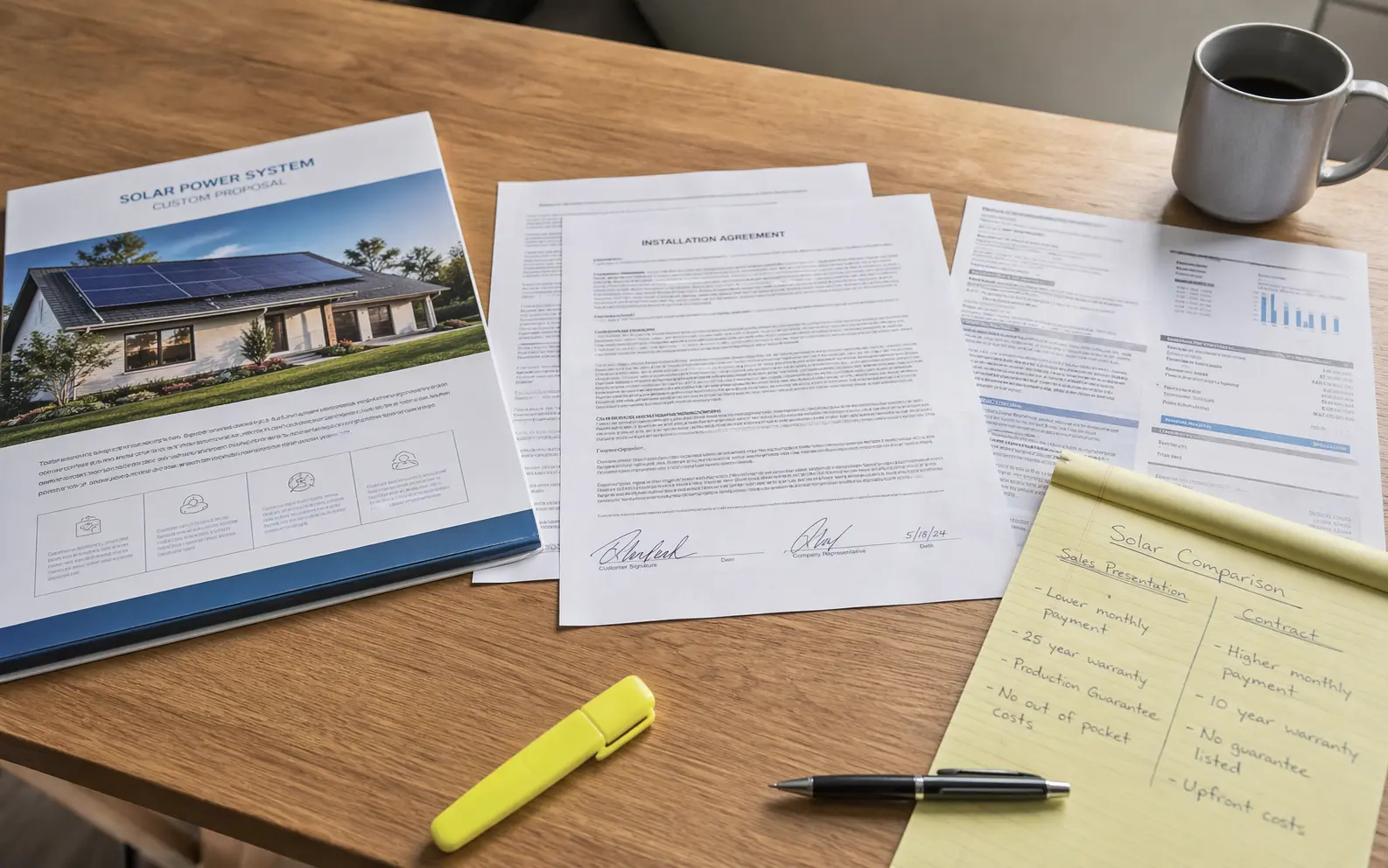
The review should compare the written documents with the sales presentation, financing process, signing records, installation history, system performance, company conduct, and communications after the sale.
| Issue to Review | Why It May Matter | Evidence to Gather |
|---|---|---|
| Sales promises | Savings, payment, tax-credit, production, warranty, or transfer representations may not match the signed documents. | Proposals, emails, texts, advertisements, presentations, recordings, screenshots, and notes |
| Required disclosures | Certain information, notices, or cancellation forms may have been required based on the transaction and signing date. | Complete contract package, disclosures, cancellation forms, welcome-call records, and document-delivery emails |
| Financing terms | The financed amount, dealer fees, expected prepayment, or payment increase may not have been clearly understood. | Loan agreement, Truth in Lending disclosures, cash price, financed amount, APR, and payment schedule |
| Signatures and authorization | The electronic-signing process, document delivery, signer identity, or completion certificate may require review. | Signed copies, electronic audit trails, timestamps, email confirmations, device information, and account notices |
| Installation and activation | The project may be unfinished, unpermitted, uninspected, defective, or not approved for operation. | Permits, inspection results, utility records, photographs, monitoring data, and correction notices |
| System performance | Actual production or savings may differ materially from the proposal or a written guarantee. | Production estimates, monitoring reports, utility bills, outage records, and service communications |
| Company conduct | A company may have failed to perform, stopped responding, closed, transferred the account, or entered bankruptcy. | Service requests, unanswered messages, closure notices, bankruptcy records, and account-transfer letters |
| Home-sale requirements | A payoff, buyout, transfer, assumption, UCC filing, or buyer approval may affect a sale or refinance. | Payoff quotes, transfer packets, title reports, UCC records, buyer communications, and closing documents |
These issues do not guarantee that an agreement can be cancelled. They identify areas that may need professional review before the homeowner is told that nothing can be done.
The Project Stage Changes the Available Options
A contract signed yesterday presents a different situation from a system that has operated for seven years. Identify exactly where the project stands.
Signed but Not Yet Installed
Before installation, determine whether permits have been requested, equipment has been ordered, financing has been funded, and cancellation or pre-installation charges apply.
Act quickly. Waiting can allow the project to progress into permitting, equipment delivery, installation, lender disbursement, or other stages that make the situation more complicated.
Installed but Not Yet Activated
An installed system may still be waiting for an electrical inspection, correction work, utility interconnection, meter changes, or permission to operate.
The U.S. Department of Energy explains that local permitting, inspection, and utility connection are separate project steps that generally occur before a rooftop system is allowed to produce electricity on the grid.
Review the official Department of Energy rooftop solar permitting guidance.
Gather the permit, inspection history, correction notices, utility application, interconnection records, meter information, and written permission to operate.
Activated but Underperforming
When a system is operating but the homeowner is not receiving the expected production or savings, compare:
- The original annual production estimate
- Any written production guarantee
- Monitoring data
- Utility usage and billing records
- System outages
- Equipment alerts
- Shading or design assumptions
- Household electricity usage changes
- Net-metering or utility-credit calculations
- Service and warranty requests
A functioning system can still produce a poor financial result. Production, utility charges, solar payments, interest, dealer fees, and household usage must be reviewed together.
Operating for Several Years
Older agreements may involve payment escalators, loan re-amortization, aging equipment, warranty disputes, roof work, company closures, account transfers, or an approaching home sale.
The amount of time that has passed can affect available contract, complaint, negotiation, and professional options. Do not delay once a serious problem becomes clear.
Review the Solar Financing Separately
The financing can be just as important as the installation agreement. A homeowner may have signed a sales contract with one company and a loan agreement with an entirely separate lender.
The Consumer Financial Protection Bureau has documented several risks involving solar-specific loans.
Hidden Dealer Fees and Markups
The CFPB found that some solar lenders include substantial markups and fees in the loan principal. These are often called dealer fees, program fees, platform fees, lending fees, or finance fees.
In some transactions, those fees can increase the amount financed by 30 percent or more above the cash price. A low advertised interest rate does not necessarily mean the overall financing is inexpensive.
Compare:
- The system’s cash price
- The amount financed
- The stated interest rate
- The annual percentage rate
- The finance charge
- The total of payments
- Any dealer, program, platform, or origination fee
Payment Re-Amortization
Some solar loans begin with a lower scheduled payment based on the expectation that the homeowner will make a large principal payment during an initial period.
If that principal payment is not made, the remaining balance may be re-amortized and the required monthly payment may increase. Homeowners sometimes describe this as a solar payment that suddenly jumped even though every regular payment was made on time.
The Federal Solar Tax Credit Changed for 2026
Many older solar sales presentations assumed that the homeowner would receive a federal tax benefit and apply an equivalent amount to the loan principal.
That assumption created several possible misunderstandings:
- A tax credit was presented as guaranteed cash
- The quoted “net cost” was mistaken for the actual loan principal
- The homeowner did not have enough tax liability to use the full credit immediately
- The homeowner received a tax benefit but not an equivalent refund check
- The loan payment increased because the expected principal payment was not made
Current IRS guidance states that the Residential Clean Energy Credit applied to eligible property installed from 2022 through December 31, 2025. It is not available for property placed in service after December 31, 2025.
For qualifying earlier projects, the prior credit was nonrefundable, meaning it could not exceed the homeowner’s federal tax liability. Unused amounts could potentially be carried forward under applicable IRS rules.
A homeowner with a 2026 installation should not assume that the prior federal homeowner credit remains available simply because a proposal, loan illustration, or salesperson referred to a 30 percent credit.
Review the current IRS Residential Clean Energy Credit guidance and consult a qualified tax professional about your specific tax situation.
Also review the CFPB residential solar financing report for information about dealer fees, tax-credit claims, expected prepayments, and payment increases.
The Solar Payment Problems page explains these issues in greater detail.
For deeper guidance about the most common solar financing problems, read:
- Hidden Solar Dealer Fees and the Tax-Credit Trap: Why Your Loan Costs More Than You Were Told
- Why Did My Solar Payment Suddenly Jump? The Escalator Clause Explained
- Will Getting Out of My Solar Contract Hurt My Credit?
What If the Solar Salesperson Lied or Left Out Important Terms?
A verbal statement does not automatically override a signed contract. That does not mean the sales process should be ignored.
The difference between what the homeowner was told and what the documents say may be an important part of the review.
Common claims worth documenting include:
- The solar payment would never increase
- The utility bill would disappear
- The system would eliminate all electricity costs
- The federal tax credit was guaranteed cash
- The tax credit would automatically pay down the loan
- The system would pay for itself
- The agreement could be cancelled at any time
- The contract would automatically transfer to a future buyer
- The company was affiliated with the utility or government
- The system would produce a guaranteed amount of electricity
- The homeowner was signing only for an estimate or site survey
- The financing was not a loan or would not appear as debt
- No lien, filing, or property issue would be created
Homeowners who believe the sales presentation was false or materially incomplete should also read The Solar Salesperson Lied to Me: What Are My Rights in Colorado?.
Evidence to Preserve
Save:
- The original proposal
- All versions of the contract
- Loan, lease, or PPA documents
- Emails and text messages
- Advertisements and social-media messages
- Sales presentations
- Tax-credit illustrations
- Utility and savings projections
- Recorded calls or voicemails you lawfully possess
- Handwritten notes made near the time of the sale
- Electronic-signature emails and audit records
- Documents showing the actual payments, production, and utility costs
Download complete files before a salesperson’s account, portal, or website disappears. Screenshots are useful, but original documents and complete message exports are usually easier to review.
Review the Signatures and Electronic Records
Many solar agreements are signed quickly on a salesperson’s tablet or through an emailed electronic-signature link.
That does not automatically make the agreement invalid. It does mean the signing process and audit records may be relevant when the homeowner disputes what was signed or how authorization was obtained.
Review:
- Who signed each agreement
- Whether every required property owner signed
- The date and time of each signature
- The email address and telephone number used
- The electronic-signature audit trail
- Whether documents were completed before or after the signature
- Whether a salesperson controlled the device during signing
- Whether the homeowner received a complete copy afterward
- Whether completion or installation certificates were signed accurately
Do not alter the files. Preserve the original electronic copies, document metadata, confirmation emails, and audit certificates.
Can You Get Out After the Panels Are Installed?
Installation changes the situation, but it does not automatically eliminate every possible option.
Once equipment has been installed, additional questions arise:
- Who owns the panels and battery?
- Has the installer already been paid?
- Has the lender disbursed the loan proceeds?
- Is the loan already being serviced?
- Were building and electrical permits obtained?
- Were required inspections completed?
- Did the utility issue permission to operate?
- Is the system producing electricity?
- Does the contract contain a production guarantee?
- Has the roof or property been damaged?
- Would system removal affect the roof, warranty, financing, or permits?
- What does the agreement require after termination?
Do not authorize removal, alteration, repair, or disconnection without first confirming equipment ownership, documenting the current condition, and reviewing how the work could affect warranties, insurance, claims, permits, utility approval, or financing.
What If the Solar Company Closed or Stopped Responding?
The installer closing does not automatically cancel a separate solar loan, lease, or PPA. It also does not mean that every warranty, manufacturer, servicer, or system owner has disappeared.
A typical solar transaction may include:
- A lead-generation company
- An individual salesperson
- A solar sales company
- An installation contractor
- An electrical contractor
- A solar lender or originating bank
- A payment servicer
- A lease or PPA system owner
- An equipment manufacturer
- A warranty administrator
- The electric utility
Identify each company separately and determine its role. One company closing or entering bankruptcy does not necessarily eliminate the responsibilities or contractual rights involving the others.
Homeowners dealing with an abandoned project, lost warranty, or unresponsive installer should review what happens when a Colorado solar company closes.
When payments continue but the installer or original provider has disappeared, read Your Solar Company Went Bankrupt and a Servicer Took Over: Is Your Warranty Still Valid?.
Can You Get Out Because You Are Selling the Home?
Selling the property does not automatically cancel a solar loan, lease, or PPA.
The obligation may need to be addressed through:
- A loan payoff
- A lease or PPA buyout
- An approved buyer assumption
- A contract transfer
- A prepaid agreement
- A negotiated release
- A UCC termination or temporary accommodation
- Another agreement-specific process
Request written payoff, buyout, transfer, assumption, and UCC information before listing the property or accepting an offer. Problems become harder to solve after a buyer, title company, mortgage lender, and closing deadline are already involved.
Solar Loans
A solar loan may need to be paid off at closing, paid off before closing, or assumed by an eligible buyer if the lender permits assumption. The actual loan terms control.
Solar Leases and PPAs
A lease or PPA may require notice, buyer credit approval, transfer documents, fees, a buyout, or another process. Never promise a buyer that the agreement will transfer automatically unless the system owner has confirmed that in writing.
UCC Filings
A UCC financing statement is not always a traditional mortgage lien against the entire house. Some filings identify the solar equipment as collateral. A fixture filing or filing connected to the real property may create a different title or lender issue.
The filing, collateral description, secured party, amendment history, and termination status must be reviewed. Do not rely solely on a customer-service representative referring to every UCC record as “not a lien.”
The Colorado Secretary of State maintains public UCC records, and the Colorado Solar Resources directory explains where to search and which documents to request.
Review the Selling a Home With Solar in Colorado guide before committing to a closing timeline.
For home-sale problems involving a third-party-owned system, read Selling Your Colorado Home With a Solar Lease: What Happens When the Buyer Will Not Take It Over?.
For title and refinancing issues, review What Is a UCC-1 Solar Lien, and How Can It Block a Colorado Home Sale or Refinance?.
What Should You Do First?

1. Download Every Agreement
Save complete copies of the sales agreement, installation contract, loan, lease, PPA, battery agreement, warranties, disclosures, change orders, completion certificates, and electronic-signature records.
Do not assume the copy available in an online account is complete. Compare page counts, exhibits, initials, signatures, and attachments.
2. Identify Every Company
Create a list of the salesperson, sales company, installer, electrical contractor, lender, servicer, system owner, manufacturer, warranty provider, and utility.
Record each company’s legal name, address, telephone number, email, website, account number, and role.
3. Build a Complete Timeline
List the major events in order:
- Initial sales contact
- Proposal presentation
- Contract signatures
- Financing signatures
- Welcome or verification call
- Site survey
- System-design approval
- Permit application
- Installation
- Inspection
- Utility interconnection
- Permission to operate
- Lender disbursement
- First solar payment
- Any payment increase
- System or service problems
- Home-sale or refinance activity
- Complaints and company responses
4. Compare the Promises With the Paperwork
Write down the specific claims that caused you to sign. Then locate the contract section, proposal, disclosure, or communication that supports or contradicts each claim.
Be specific. “They lied about everything” is less useful than: “The proposal showed a combined monthly cost of $185, but the solar loan is now $246 and the utility bill averages $140.”
5. Compare the Expected Result With the Actual Result
Calculate and document:
- The original cash price
- The financed amount
- The current loan or buyout balance
- The original and current solar payment
- The utility bill before solar
- The utility bill after solar
- The system’s estimated annual production
- The system’s actual annual production
- Repair, roof, service, transfer, or closing costs
6. Decide What You Need Resolved
Identify the result you are seeking. It may be:
- Cancellation
- Release
- Settlement
- Payment correction
- Loan adjustment
- System activation
- Repair or warranty service
- Production review
- Home-sale transfer
- Buyout or payoff correction
- UCC resolution
- Written confirmation from the responsible company
The requested outcome helps determine which documents, companies, complaint systems, and professionals matter most.
7. Create a Written Record
Telephone calls can be useful, but repeated calls without written follow-up often create a poor evidence trail.
After a call, send an email summarizing:
- The date and time
- The representative’s name and department
- What was discussed
- What the company promised to do
- The expected response date
- The resolution you requested
8. Do Not Ignore Payments or Deadlines
Disputing a transaction does not automatically suspend a loan, lease, PPA, collection process, court deadline, warranty deadline, utility requirement, or home-sale obligation.
Stopping payment without a documented strategy can lead to late fees, default, collection activity, adverse credit reporting, or legal action.
Before changing payments or taking an action that could affect credit, property, equipment, or legal rights, review the specific agreement and obtain appropriate professional guidance.
Should You File a Solar Complaint?
A well-documented complaint can create an official record, encourage a company response, and help regulators identify repeated conduct. It does not automatically cancel a private agreement or guarantee an individual financial remedy.
Colorado Attorney General
The Colorado Attorney General accepts product and service complaints involving matters such as false advertising, misrepresentations, incorrect billing, deceptive practices, product problems, and failure to perform a service.
The Attorney General recommends documenting dates, people, communications, financial loss, steps already taken, and the resolution requested.
Review the Colorado product and service complaint guidance.
Colorado Consumer Credit Unit
Complaints involving a solar lender, finance company, creditor, loan terms, or collection activity may belong with the Colorado Attorney General’s Consumer Credit Unit.
The Unit administers Colorado consumer-credit laws, investigates complaints involving lenders and creditors, and may take disciplinary or legal action within its authority. It does not provide private legal representation.
Review the Colorado consumer-credit complaint form.
Other Agencies and Records
Depending on the problem, relevant resources may include:
- The Consumer Financial Protection Bureau for certain solar-loan complaints
- The Federal Trade Commission for deceptive sales practices
- The Colorado electrical licensing authority
- The local building or electrical inspection department
- The electric utility or Colorado Public Utilities Commission
- The Colorado Secretary of State for business and UCC records
- A court, bankruptcy court, or private attorney when appropriate
The Colorado Solar Resources directory explains which complaint system or public record may fit the issue.
Common Mistakes to Avoid
- Waiting until the final days before a home closing
- Relying on a salesperson to explain the cancellation language
- Saving only the signature page instead of the complete agreement
- Assuming the installer and lender are the same company
- Assuming cancellation of one agreement cancels all other documents
- Deleting texts, emails, advertisements, or account notices
- Calling repeatedly without creating a written record
- Filing a vague complaint without dates, documents, or a requested resolution
- Stopping payments based solely on general internet advice
- Letting another contractor alter the system before documenting its condition
- Removing panels without confirming who owns them
- Assuming an expired cancellation period means no other path exists
- Assuming the former federal tax credit still applies to a 2026 installation
- Signing a transfer, buyout, settlement, or release without reading every term
Frequently Asked Questions
How long do I have to cancel a new solar contract in Colorado?
For a covered system sale entered into on or after July 1, 2026, Colorado law provides at least three business days to cancel without a financial penalty other than a permitted nonrefundable deposit. The period does not begin until the required welcome call occurs. Other agreements and older transactions may be governed by different rules and contract terms.
Can I cancel after the three-day period has passed?
The automatic cancellation period may have expired, but that does not answer every other contract question. Sales claims, disclosures, signatures, financing, installation status, performance, company conduct, buyout rights, and transfer terms may still need review.
Can I cancel a solar loan without cancelling the installation contract?
The solar loan and installation agreement may be separate contracts with separate companies. Cancelling, disputing, or resolving one does not necessarily cancel the other. Both documents and the relationship between them must be reviewed.
Can I get out of a solar lease or PPA?
A lease or PPA may contain a transfer, buyout, prepayment, early termination, removal, default, or end-of-term procedure. Whether another path exists depends on the agreement, sales process, company performance, project history, and applicable law.
Can I cancel after the panels have been installed?
Installation makes the matter more complicated, but it does not automatically eliminate every possible resolution. Ownership, financing, permits, inspections, utility activation, system condition, warranties, performance, and removal obligations must be considered.
What if the system was installed but never turned on?
Check the permits, electrical inspection, correction notices, utility interconnection application, meter work, monitoring account, and permission to operate. Determine which company was responsible for each unfinished step.
Is the 30 percent federal solar tax credit available for a 2026 installation?
Current IRS guidance states that the Residential Clean Energy Credit is not available for property placed in service after December 31, 2025. Homeowners with older qualifying projects or unused prior credits should consult a qualified tax professional about their individual circumstances.
Should I stop making payments while my contract is being reviewed?
Not based solely on a review request or general website information. A dispute does not automatically suspend the payment obligation. Stopping payment can trigger default, fees, collections, credit reporting, or legal action.
What happens if the solar installer went out of business?
The installer closing does not automatically eliminate a separate loan, lease, PPA, manufacturer warranty, equipment owner, or payment servicer. Identify every company and agreement involved before concluding that no responsible party remains.
Can I sell my Colorado home with a solar contract?
Yes, but the agreement must be addressed. A loan may require payoff or an approved assumption. A lease or PPA may require buyer approval, transfer documents, fees, a buyout, or another contract-specific process.
The Bottom Line
A signed solar agreement does not automatically give the solar company the final word. It also does not guarantee that every homeowner can simply cancel.
The responsible approach is to examine every viable path before deciding what the situation supports. That review should include the cancellation deadline, contract type, financing, sales process, signatures, companies, evidence, project history, current obligations, and outcome the homeowner needs.
Start with the detailed Colorado Solar Contract Review when you are ready to submit the agreement and supporting documents.
Official Sources Used in This Guide
- Colorado General Assembly: Consumer Protection Residential Energy Systems
- Federal Trade Commission: The Cooling-Off Rule
- Federal Trade Commission: Solar Power for Your Home
- Consumer Financial Protection Bureau: Solar Financing Issue Spotlight
- Internal Revenue Service: Residential Clean Energy Credit
- U.S. Department of Energy: Rooftop Solar Permitting and Inspection
- Colorado Attorney General: Product and Service Complaints
- Colorado Attorney General: Consumer Credit Complaint
This article provides general educational information and is not legal, tax, financial, credit, real estate, title, insurance, or technical advice. Contract rights and available options depend on the specific documents, facts, timing, and applicable law. Solar Exit Colorado is not a law firm.